When a Child Steps Slightly Aside from the World: Meeting Autism Without Reducing It
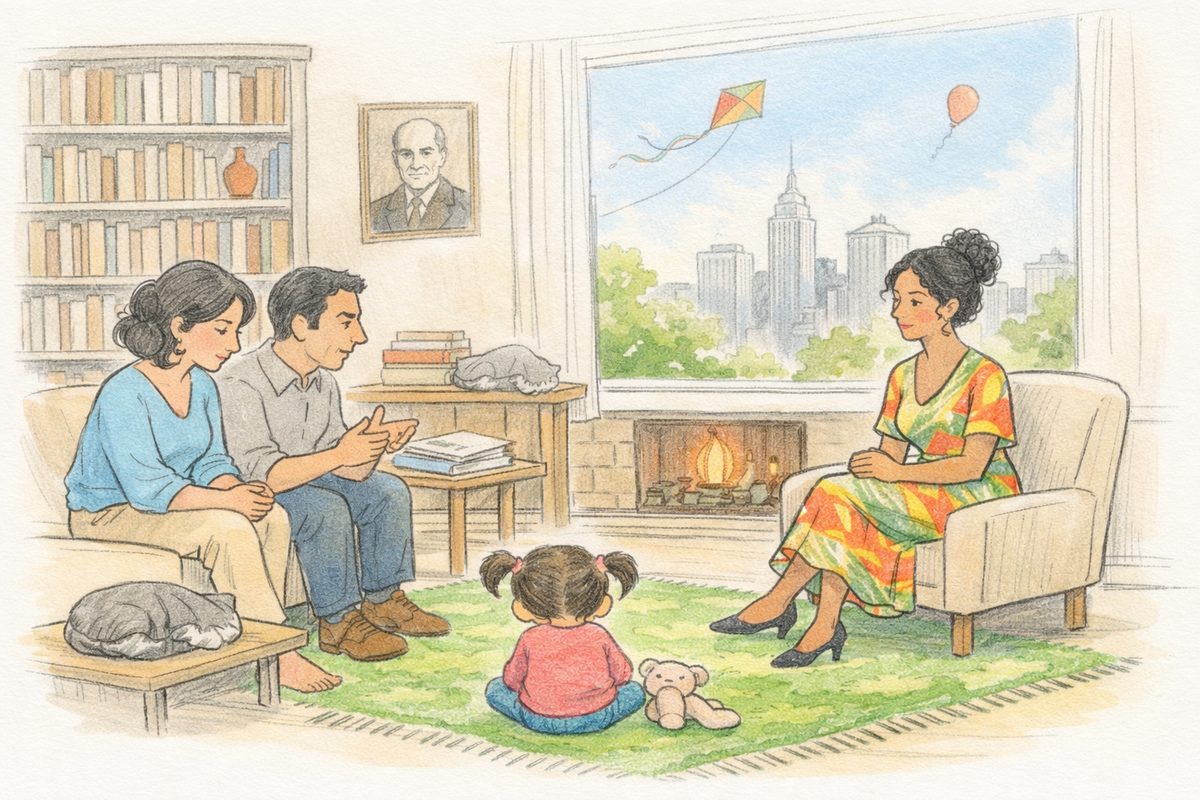
In the northern districts of Marseille, during the community clinic where I meet very young children, parents sometimes arrive with a word already placed upon their child: autism. Sometimes whispered by a nursery worker, sometimes suggested by a hurried doctor, sometimes born from an anxiety that has grown too large. They arrive with this word as one arrives with a verdict. They are afraid. They are searching. They hope I will tell them it is not that. Or that if it is, then something can still open.
The child, meanwhile, is three years old. He knows nothing of this word. He knows only what he feels: a world that is too loud, too fast, too close at times. He knows he prefers lining up objects rather than responding to a call. He knows he retreats into a repetitive gesture that soothes him. He knows he turns his gaze away not because he refuses the other, but because the other overwhelms him. He knows he needs time to make sense of what surrounds him.
Frances Tustin wrote about these children as beings who protect themselves from a world experienced as intrusive, sometimes painful. Meltzer described an overflowing sensoriality, a world perceived without filters. Winnicott reminded us that a child develops only if he finds a sufficiently good environment, capable of holding him without crushing him. Pikler insisted on the freedom of movement, on trust in the child’s spontaneous competencies, on the importance of not intervening too quickly, too strongly, too close.
In the clinic, I see children who do not yet speak, or who speak differently. Children who play alone, but who sometimes cast a fleeting, almost imperceptible glance, like a timid invitation. Children who do not respond to their name, but who soften when we adjust our voice, our rhythm, our distance. Children who seem far away, yet who, in a gesture, a breath, a micro‑movement, show that they are here.
The word autism, in these moments, is too big. Too heavy. Too definitive. It crushes what in the child is still in motion. It freezes what in him is trying to unfold. It sometimes prevents parents from seeing what is going well, what is forming, what is weaving itself.
My work is to unfold this word. To make it breathable. To remind them that autism is not an identity but a way of being in the world. A way that is sometimes fragile, sometimes disconcerting, but never fixed. I tell parents that their child is not a diagnosis. He is a subject in becoming. A subject who needs to be met where he is, not where one wishes he would be.
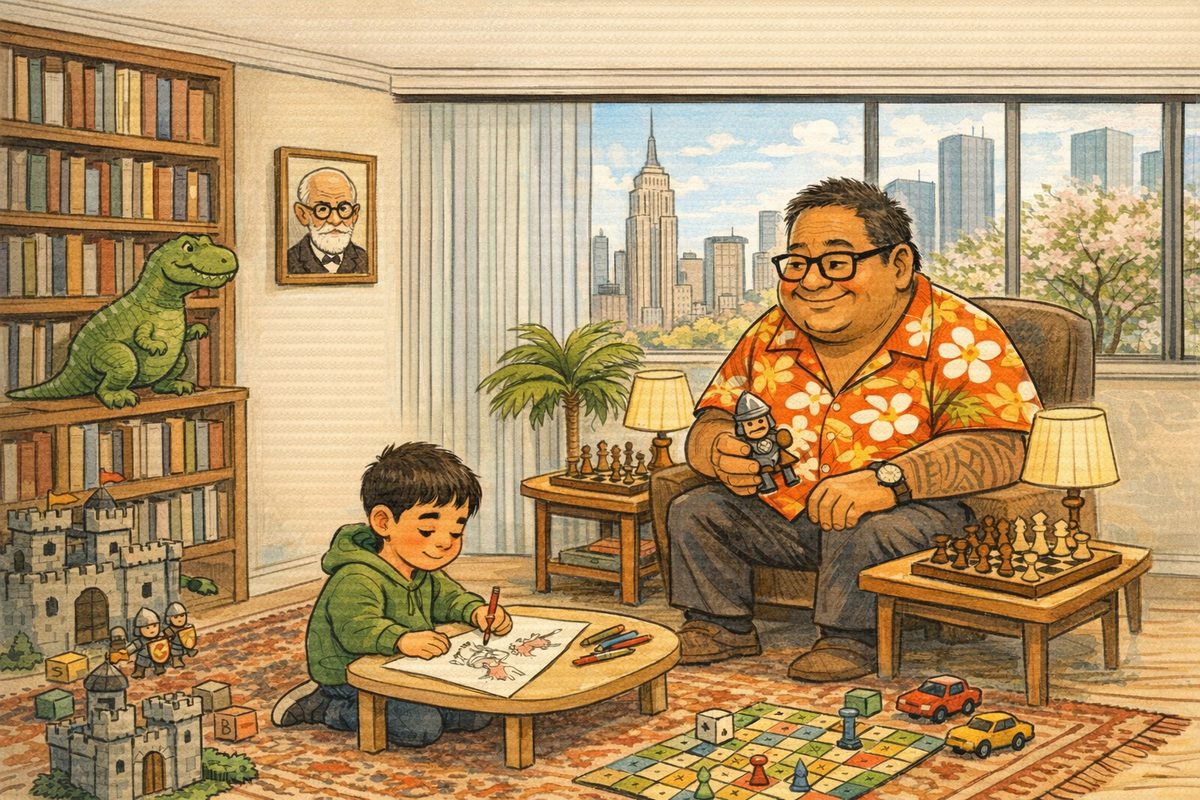
Play is often our first language. A simple play, slow, attuned. A play in which we follow the child rather than precede him. A play in which we wait for him to look at us, even for a second. A play in which we welcome his repetitive gestures not as symptoms to correct but as attempts at self‑soothing. A play in which we offer without imposing. In which we open without invading.
With a three‑year‑old child, care passes through tiny things: a block placed next to his, a sound imitated, a shared rhythm, a respected silence. Sometimes the child lets us enter his play. Sometimes not. But every attempt matters. Every micro‑encounter is a beginning.
Parental guidance is essential. Parents need support, reassurance, accompaniment. They need to hear that they are not responsible for what is happening, but that they are essential for what will unfold. They need to be shown how to slow down, how to observe, how to adjust their presence. They need to regain confidence in their ability to be the parents of this child, not of an imaginary child.
Autism is not a wall. It is a language. A language sometimes silent, sometimes disconcerting, sometimes fragmented. But a language. And like any language, it can be heard, understood, accompanied.
In the northern districts, where life is often harsh, where families are sometimes isolated, where resources are scarce, this work is all the more precious. It is about restoring nuance where the world offers labels. Restoring time where everything moves too fast. Restoring confidence where fear has taken too much space.
And above all, it is about giving the child the possibility of being a child. A child who plays, who explores, who protects himself, who moves at his own rhythm. A child who, one day, perhaps, will look at us a little longer. A child who, always, deserves to be met.
REFERENCES
Dolto, F. (1985). When the Child Appears. Paris: Gallimard. Haag, G. (2000). The Autistic Child: The Baby and the Mother. Paris: PUF. Meltzer, D. (1975). Explorations in Autism. Perthshire: Clunie Press. Pikler, E. (1979). Moving in Freedom. Paris: PUF. Tustin, F. (1981). Autism and Childhood Psychosis. Paris: PUF. Winnicott, D. W. (1971). Playing and Reality. London: Tavistock.