The Child – Plant: When Care Replaces Possession
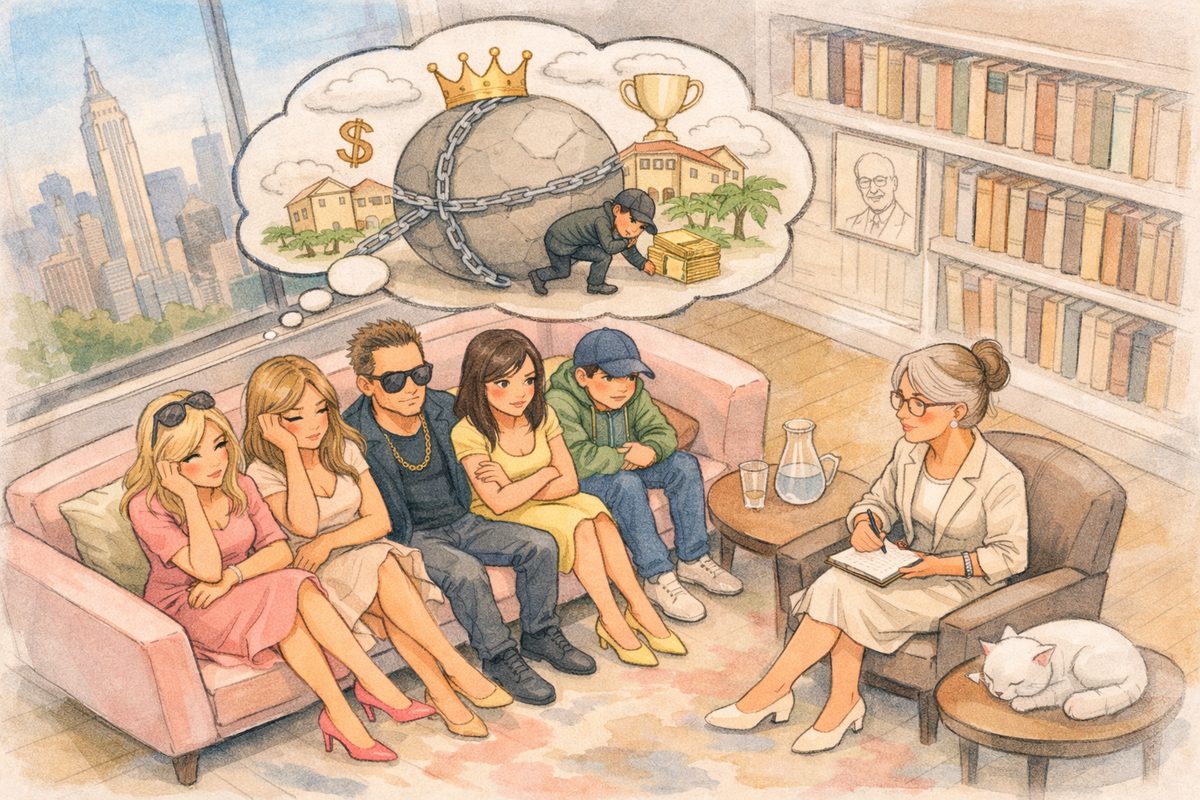
In the quiet space of a consultation, words sometimes acquire a weight they did not intend to carry. They become fragments of truth or subtle weapons, depending on how they are thrown. That day, one parent, irritated and wounded, turned to the other and said, “your precious” about the child they raise together. The tone was sharp: an accusation, an insinuation that the other parent clung too tightly to the child, as if holding a rare object meant to be protected from everything, including the co‑parent.
Yet this phrase reveals more than frustration. It exposes a projection: the assumption that if one parent cares deeply for the child, it must be out of narcissism, possession, or fusion. As if preciousness could only mean ownership. But genuine preciousness has nothing to do with possession. It is rooted in care, responsibility, and a presence that recognizes the child as a separate, unpredictable, singular being.
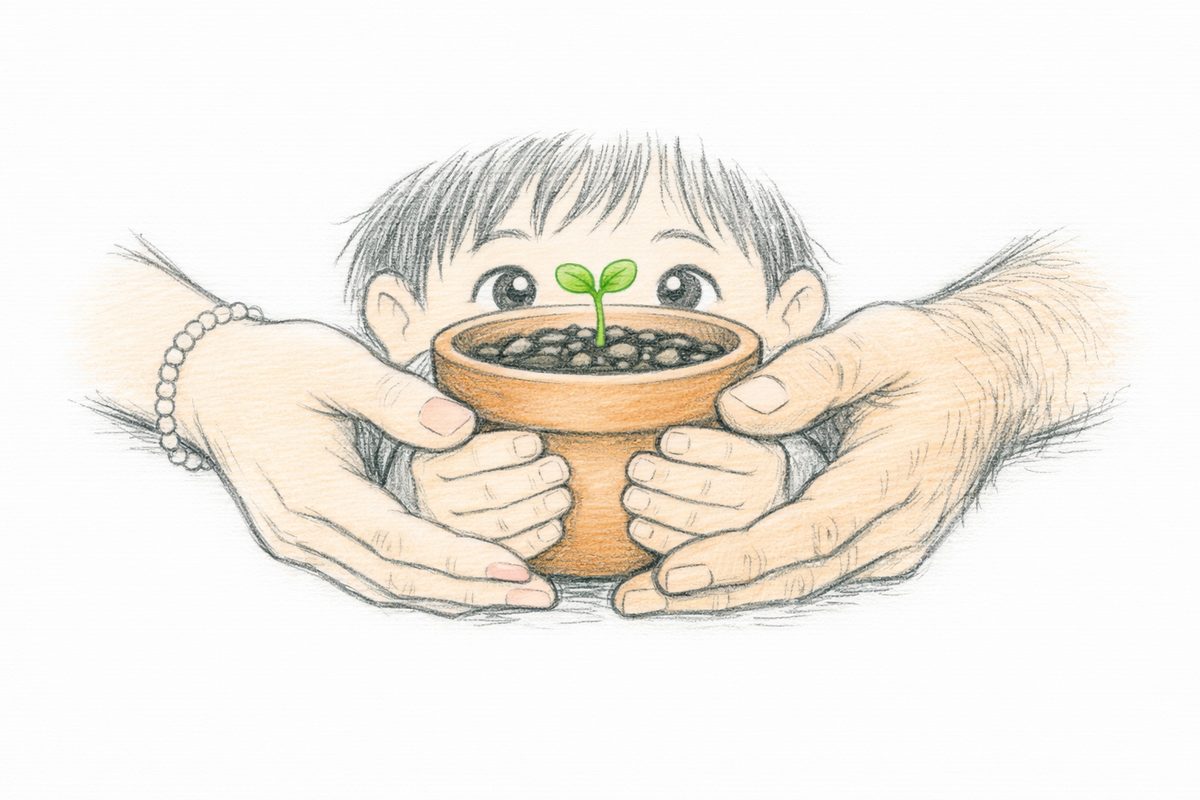
The image that emerges is that of a plant entrusted to two gardeners. They tend to it, watch its light, its water, its soil. But no gardener truly knows how a plant will grow. Nature resists prediction. It unfolds according to its own laws, its own rhythms. The role of parents is not to force the plant into a straight line with a rigid stake, but to create the conditions in which it can seek its own light. The stake imposes; care accompanies. The stake corrects; care welcomes.
In the clinical scene, “your precious” reveals the difficulty some parents have in accepting that the other may have a unique bond with the child - a bond that does not exclude them, but that they experience as a threat. Psychoanalysis reminds us that the child is never the child we imagine. Not a trophy, not a mirror, not an extension of the self. A separate being, irreducible and alive.
Another linguistic slip adds to this dynamic: when one parent says “my child” in front of the other, and sometimes in front of the child. This possessive, seemingly harmless, carries symbolic weight. It marks an attempt at appropriation, a claim to be the primary (or exclusive) parent. It may signal rivalry, injury, or a struggle for legitimacy. Saying “my child” in a conflictual context often means: “the child belongs to me, not to you,” or “I know better than you what is good for them.”
For the child, hearing “my child” instead of “our child” can create a loyalty conflict, a silent pressure to choose sides. It can distort the perception of each parent’s place, as if one were central and the other peripheral. Yet healthy co‑parenting relies on mutual recognition, even when the adults no longer share a home or a unified vision.
Thus, when one parent accuses the other with “your precious,” they speak less about the child than about their own insecurity, their fear of being displaced, their sense of being excluded. And when a parent says “my child” instead of “our child,” they reveal the difficulty of sharing, of acknowledging the other as a co‑guardian of this fragile and powerful young life.
Meanwhile, the child continues to grow, seeking light, unfolding leaf by leaf. They do not need a stake, but a climate. They do not need to be possessed, but accompanied. They do not need to be precious for one parent against the other, but welcomed by two presences capable of recognizing each other.
And it is precisely because the child grows according to their own logic - free, unpredictable, alive - that they are precious.
References
Arendt, H. (1958). The Human Condition. University of Chicago Press. Lacan, J. (1966). Écrits. Seuil. Winnicott, D. W. (1971). Playing and Reality. Tavistock Publications.