Adults
-
 Marie Nussbaum
 - 10 Feb, 2026
The Fart as a Language of the Body: Between Psychoanalysis, Culture, and Everyday Clinical Practice
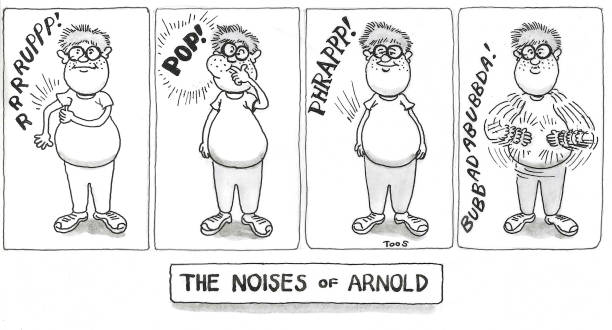
Sometimes it’s helpful to shift our gaze toward the most ordinary gestures to better understand the invisible dynamics that shape us. Observing behavioral differences between ourselves and others—and the internal tension this can provoke—can become an opportunity for learning and introspection. What we perceive as discomfort or provocation, such as a simple fart, may in fact reflect our personal history, our inner state, and that of others. Exploring this interaction, even in its triviality, helps us better situate ourselves in relation to others and opens the door to a form of everyday clinical practice, where the body speaks as much as words do. Claude Lévi-Strauss, in his work on rites and symbolic structures, did not address farting directly, but his analyses allow us to consider this act as meaningful within cultural systems. In The Way of the Masks and Mythologiques, he shows how fundamental oppositions—pure/impure, nature/culture, visible/invisible—are expressed through codified bodily practices. The fart, as an invisible yet perceptible emission, could be read as a reversal of polarity between inside and outside, between the hidden and the revealed, between the private and the social. Lévi-Strauss emphasized that rites and myths reflect universal mental structures, and that bodily practices, even the most trivial, participate in this organization of meaning. In some cultures, farting is integrated into social life without particular shame. In Papua New Guinea, it may be part of ritual games or informal communication. In rural China, public toilets are sometimes doorless, and it’s common to see children defecating in public, wearing split pants with an opening at the crotch. This practice, linked to natural infant hygiene, shows that bodily emissions are not necessarily taboo in these contexts. Bodily sounds are not systematically repressed, unlike in Japan, where toilets are often equipped with sound-masking devices that play music or water sounds to conceal bodily noises. This technology reflects a deep-seated social discomfort, especially among women, and a desire to preserve modesty and bodily control in public spaces by erasing any audible trace of intimacy. From the perspective of clinical psychology and psychoanalysis, farting can be read as an expression of internal conflict, psychic defenses, and modes of expressing discomfort. Freud identified the anal phase as central to the development of the relationship to the body, authority, and control. Farting, as an uncontrolled expulsion, can be a failed act, a discharge of instinctual energy, or a passive provocation. It may express an unconscious conflict between the desire to transgress and the social prohibition. Wilhelm Reich, in his character analysis, saw bodily relaxation as a release of muscular defenses, allowing repressed affects to surface. Farting can thus function as a defense against anxiety, a way to regulate internal tension without using language. Jacques Lacan, although he did not address farting directly, considered the body as a surface of jouissance and language. The fart can then be seen as an involuntary signifier, a rupture of the symbolic order, a bodily event that disrupts discourse. It can also be interpreted as disinhibition, reflecting a loosening of internalized norms, or regression to earlier developmental stages. In romantic relationships, it may signal a break in the seduction pact, a trivialization of the body, or even neglect of the emotional bond. The odor it emits evokes a primary, archaic olfactory trace that allows the subject to feel they exist—for themselves and for others. It conjures fecal matter, rejection, animality, but also proximity and intimacy. It can awaken family memories, childhood atmospheres, domestic practices. Some patients in therapy describe families where farting was common, tolerated, even joked about. Others recall environments where any bodily sound was repressed and associated with shame. The fart then becomes a symptom: it speaks of the subject’s history, their relationship to the body, to law, to desire. Even cinema has taken up this sound. In The Nutty Professor (1996), Eddie Murphy plays an entire family farting at the dinner table in a burlesque scene that became iconic. Beneath the humor, one can read a collective disinhibition, a transgression of social norms, and a portrayal of the body as a site of pleasure and chaos. To propose a new perspective on farting is to take a step sideways. It’s to consider that it can be an object of analysis within an everyday clinical framework, where the most banal gestures become carriers of meaning. This reflection invites us to listen to the body in its most trivial yet revealing expressions. And what if, in the end, it’s not the subject who speaks… but the fart that takes the floor? A breath from deep within, saying what the mouth cannot, asserting itself where language hesitates. Because sometimes, in the silence of social conventions, it’s the most unexpected sound that lets the unconscious be heard. References Freud, S. (1901). The Psychopathology of Everyday Life. Paris: PUF. Freud, S. (1905). Three Essays on the Theory of Sexuality. Paris: Gallimard. Reich, W. (1933). Character Analysis. Paris: Payot. Lacan, J. (1966). Écrits. Paris: Seuil. Lévi-Strauss, C. (1979). The Way of the Masks. Paris: Plon. Lévi-Strauss, C. (1964–1971). Mythologiques (4 volumes). Paris: Plon. Shadyac, T. (Director). (1996). The Nutty Professor [Film]. Universal Pictures.

- Marie Nussbaum
- 16 Dec, 2025
When the Body Disappears for Too Long: Mourning Without Ritual and the Search for Symbolization
There are forms of mourning that open in a particular kind of silence. Mourning in which the body of the deceased disappears for months, sometimes years, because it has been donated to science. Mourning in which the relatives remain in a strange suspension, caught between gratitude for the gesture and the pain of being deprived of what has always helped humans say goodbye: a body, a place, a ritual, a name carved somewhere. In my consultation, I have met adult children who lived through this. Two years of waiting to recover the body of a parent. Two years without a ceremony, without a grave, without a date, without a collective gesture. Two years in which mourning could neither begin nor continue. Two years in which absence remained raw, without form, without contour. Two years in which pain had no place to go. Freud wrote that the work of mourning consists in gradually withdrawing the psychic investment from the deceased in order to redirect it toward life. But how can this work unfold when the body is not there? When there is no place to go? When there is no moment to gather? When time itself seems suspended? Winnicott spoke of the importance of transitional objects and gestures that allow the child — and the adult — to symbolize what is missing. The funeral ritual is one of these objects. It creates a passage. It transforms death into a psychic event. It allows one to say, “It happened.” It allows one to begin thinking what, without this, remains unthinkable. When the body is donated to science, this passage is interrupted. The parent’s gesture, often generous, sometimes militant, can be experienced by the children as a kind of dispossession. Not because they oppose the donation, but because they no longer have access to what, for them, would have allowed the separation to begin. Dolto reminded us that the body of the deceased is not only a biological body: it is a symbolic support, a last link, a final message. In some cases, the donation of the body leaves the relatives in a form of white mourning, as Racamier described it. A mourning without an object. A mourning without a scene. A mourning without proof. A mourning that cannot be spoken or represented. A mourning that remains suspended, like a book left open with its last pages missing. Clinical psychology and psychoanalysis can accompany these rare but deeply painful situations. They help restore meaning where reality has been too abrupt. They help rebuild an inner ritual when the outer ritual could not take place. They create a space where words can partially replace what could not be lived. For adult children, it is often a work of reappropriation. Reappropriation of the parent’s gesture, which can be understood as an act of transmission, an act of trust in science, an act of generosity. Reappropriation of their own pain, which can finally be recognized, named, heard. Reappropriation of the bond, which can be rebuilt differently, without a body but not without memory. Kaës wrote that rituals are not merely traditions: they are collective psychic devices that transform the unbearable into something thinkable. When they are missing, new ones must be invented. A letter written to the deceased. A walk. A piece of music. A chosen object. A symbolic place. A date. A gesture. Something that allows one to say: “I let you go, but I keep you with me in another way.” For those who are considering donating their body to science, it is possible to help their loved ones by informing them of their intention. By explaining what this gesture means to them. By giving them the possibility to imagine an alternative ritual. By telling them that they will have the right to create a moment, a place, a word. By giving them permission to say goodbye even without a body. By offering, before leaving, a space in which the symbolic can begin to take shape. The donation of the body to science is a noble gesture. But it sometimes leaves those who remain with an enigma. An enigma that psychoanalysis can help unfold. An enigma that requires time, gentleness, creativity. An enigma that, one day, can become a story. And in that story, the deceased finds a place again. A living place. A symbolic place. A place that finally allows those who remain to continue living. REFERENCES  Dolto, F. (1985). When the Child Appears. Paris: Gallimard. Freud, S. (1917). Mourning and Melancholia. In Metapsychology. Paris: Gallimard. Kaës, R. (2009). Unconscious Alliances. Paris: Dunod. Lebovici, S. (1983). The Infant, the Mother and the Psychoanalyst. Paris: Bayard. Racamier, P.-C. (1992). The Genius of Origins. Paris: Payot. Winnicott, D. W. (1971). Playing and Reality. London: Tavistock.
- Marie Nussbaum
- 20 Nov, 2025
When Checking Becomes Surviving: The Invisible Anxiety Behind Obsessive Rituals
There are patients who come to therapy in a state of profound exhaustion, caught in rituals that have taken hold of their lives. They speak of a fatigue that begins the moment they wake up, of a worry that settles in before the day has even started. They say, “I know it’s irrational, but I can’t stop.” And behind that sentence lie months, sometimes years, of silent struggle. Some check the door several times before leaving home. Others wash their hands until the skin becomes irritated. Still others retrace their steps to make sure the gas is off, the car is locked, that nothing terrible is about to happen. These are not trivial gestures. They are desperate attempts to keep at bay a diffuse fear, a fear without an object, a fear of catastrophe that has no name. A fear that is not real, yet feels as if it were. One patient told me she washed her hands ten times before preparing her children’s meals. She said, “I know my hands are clean, but I’m afraid of giving them something.” That “something” had no shape, no name. It was a floating anxiety, a sense of threat that moved from one object to another. She was not truly afraid of germs. She was afraid of not being a protective enough mother, of letting an invisible danger slip through, of not being equal to what life demanded of her. Washing became a ritual to soothe an old guilt, an overwhelming responsibility, an anxious form of love. Another patient would systematically return to check the door of his apartment. He said, “I know it’s locked, but I’m afraid something will happen if I don’t check.” That “something” had no form either. It was a diffuse worry, a background anxiety looking for a place to land. The door became that place — a scene where anxiety could play itself out without flooding everything else. What often strikes me is the solitude in which these patients live their rituals. They know it makes no sense. They know the door is locked, the faucet is off, the lights are out. They know it intellectually, but their body does not know it. Their body demands another gesture, another verification, another impossible certainty. And it is this impossibility that exhausts them. Clinically, these symptoms rarely appear by chance. They emerge at moments when life shifts: a birth, a loss, a separation, a professional change, a new responsibility. Anthropologists like Mary Douglas have shown how human societies use rituals to contain uncertainty. Obsessive patients create their own rituals to contain an anxiety that overflows. It is not the door they check, nor the hands they wash, but their own capacity to remain standing in a world that feels unstable. Psychoanalysis does not approach these rituals as errors to correct. It listens to them as singular responses to singular histories. Freud (1907/1984) showed that the obsessive subject tries to master a thought or desire they deem dangerous. Winnicott (1965) emphasized the importance of a reliable environment that allows the subject to relinquish omnipotence. Bion (1962), in a more international perspective, described the need to transform raw anxiety into thought. Other traditions, such as the Palo Alto school or the transcultural work of Kleinman (1988), highlight how the body, culture, and social representations shape these rituals. What matters is never to reduce the patient to their symptom. The ritual is only one fragment of their story. One must cross this gesture with everything that surrounds it: losses, responsibilities, identifications, fears, desires, recent or ancient events that have weakened their capacity to contain anxiety otherwise. The symptom is not an enemy to eliminate but a language to decipher. In some cases, the ritual softens when the patient discovers what they were truly trying to check: not the door, not the cleanliness of their hands, but their own solidity. Their capacity to tolerate uncertainty. To accept that not everything can be controlled. To recognize that vulnerability is not a fault. And sometimes, through this patient work, the door stops being a place of threat. The hands stop being a potential danger. The gesture loosens. The body breathes differently. The person discovers they can leave home without returning, cook without washing their hands ten times, walk away from a closed door without needing to touch it again. When that day comes, it is not a victory over the symptom. It is a meeting with oneself. A meeting that depends on the patient’s history, on what they carry, on what they have lived, on what they can symbolize. Nothing is universal. Nothing is mechanical. Everything is singular. And perhaps this is what analytic work ultimately allows: not checking, but self-checking. Not controlling, but understanding. Not reassuring, but transforming. A way of giving the world back some of its fluidity, and the subject some of their freedom. References  Bion, W. R. (1962). Learning from Experience. London: Heinemann. Douglas, M. (1966). Purity and Danger. London: Routledge. Freud, S. (1907/1984). Delusion and Dream in Jensen’s Gradiva. New York: Moffat, Yard. Kleinman, A. (1988). Rethinking Psychiatry: From Cultural Category to Personal Experience. New York: Free Press. Winnicott, D. W. (1965). The Maturational Processes and the Facilitating Environment. London: Hogarth Press.
- Marie Nussbaum
- 01 Oct, 2025
Sexual Addiction: Between Pleasure, Suffering, and the Quest for Connection
Sexual addiction, far from being a mere excess of desire, challenges the modalities of pleasure, the relationship to others, and the body. It can be a source of enjoyment, but becomes symptomatic when it imposes itself as the sole mode of psychic regulation or expression — at the cost of suffering, isolation, and compulsive repetition. Contemporary psychoanalytic perspectives Contemporary psychoanalytic literature, including the work of Vincent Estellon, Joyce McDougall, Patrick Carnes, Aviel Goodman, Shere Hite, Martin Kafka, and Laurent Karila, explores the archaic roots of these behaviors. Estellon describes a "defensive sexualization": a way to ward off the terror of loving and being loved by substituting affective connection with repetitive, often affectless sexual scenes. Clinical cases and repetitions Corentin cycles through female partners with one obsession: making them climax. Yet as soon as emotional depth threatens to emerge, he vanishes. He is less interested in the other than in the effect he produces. He experiences himself as disposable, seeking proof of his worth through repetition, never allowing himself to be touched. The orgasm of the other becomes a substitute for love — a fleeting validation of existence, devoid of attachment. Tony grew up with an impotent, absent father, unable to embody a figure of transmission. His compulsive sexuality, marked by a drive for performance, seems to respond to a castration anxiety. He seeks to prove his masculinity, but no act suffices to fill the void left by paternal failure. Codified practices and ritualizations Ari and Jean frequent only swingers' clubs. For Ari and Jean, swinging has become ritualized — a repeated scene where the conjugal bond is tested. Beneath the intensity lies a difficulty in encountering each other outside performance. Garance and Éluard, married for thirty years, now connect only through the thrill of upcoming sexual freedom. One partner begins to suffer, no longer recognizing themselves in the practice. The balance falters — not because of the practice itself, but due to a loss of meaning, absence of dialogue, and growing solitude within the bond. Omnipotence and dispossession Anna, a brilliant academic, consults for unexplained fatigue. She finds relief in BDSM practices — a form of dispossession. Yet her submission seems to replay an ambivalence: the social and intellectual power she cannot inhabit, delegated to the other in intimacy. Karim spends exorbitant amounts on sex work. He can no longer form romantic bonds. "At least there, I know what I'm worth," he says. Payment becomes a ritual of control — a shield against rejection and a way to fix the relationship in a reassuring asymmetry. Distinguishing pleasure from symptom These forms of pleasure are not inherently pathological. They may express singular desire, self-exploration, or consensual play. But when they become the sole mode of connection, accompanied by suffering, isolation, shame, or chronic dissatisfaction, they signal a psychic conflict worth exploring. As McDougall notes, such patients often experienced early intrusion or abandonment, constructing powerful defenses to survive annihilation anxiety. ReferencesCarnes, P. (2001). Out of the Shadows: Understanding Sexual Addiction. Hazelden Publishing. Estellon, V. (2012). Les racines archaïques des addictions sexuelles. Société Psychanalytique de Paris. Kafka, M. P. (2010). Hypersexual disorder: A proposed diagnosis for DSM-V. Archives of Sexual Behavior, 39(2), 377–400. McDougall, J. (1982). Theatres of the Body. Free Association Books. Goodman, A. (1993). Diagnosis and treatment of sexual addiction. Journal of Sex & Marital Therapy, 19(3), 225–251.
- Marie Nussbaum
- 01 Apr, 2025
Suffering Bodies, Absent Speech
Eating disorders — anorexia, bulimia, binge eating — raise questions far beyond nutrition or food-related behaviour. They reveal a troubled relationship with the body, self-image, desire, and often, the Other. The question is not simply what the individual eats or refuses to eat, but what this behaviour means to them, what it communicates in their place — sometimes from a buried history that has never been spoken. When speech is obstructed or too painful to express, the body speaks: it mimics, reenacts, substitutes. The eating symptom becomes a gesture of figuration, a way for the subject to become readable where they cannot be heard. Freud described the symptom as a compromise between drive and repression; Lacan reminds us that "the symptom is the trace of a bodily event captured in the order of language." Three Clinical Cases Anastasia (17) comes to therapy at her mother's request, due to her extreme thinness. Intellectually gifted, she rejects all medical concern. A phrase recurs in her speech: "I want to disappear without making noise." She avoids signs of femininity, distrusts bodily transformation, and appears to seek through dietary control a total mastery over her body — and ultimately, over her place in the world. Her emaciated body becomes a symbol of resistance against intrusion, sexualisation, and the gaze of the Other. Anton (24) begins therapy after a breakup that triggers renewed bulimic episodes. He describes alternating between uncontrollable urges and violent rejection as punishment: "I fill myself to hate myself afterward." His family history reveals paternal abandonment and an emotionally preoccupied mother. The unspoken affective void from childhood appears lodged in his body. By reworking the unmet needs of childhood through transference, Anton begins to articulate his experience in terms other than compulsion. Rachel (38) suffers from nighttime binge-eating. In early sessions, she describes her body as "an armor," a means to become invisible, a protection from a world perceived as threatening. Her history is marked by unprocessed traumatic events. The body functions as a projection screen; the eating symptom acts as a numbing agent in response to unspeakable suffering. Through verbalising this buried experience, Rachel begins to reclaim her body — not as a barrier, but as a space of existence. Conclusion Eating disorders cannot be reduced to nutritional concerns or isolated behavioural phenomena. They may be understood as psychic expressions where speech fails — incomplete attempts to give shape to subjective suffering. Each patient engages with the symptom in a unique way, grounded in their personal history. Psychoanalysis does not aim to erase the symptom but to elaborate it. It offers a space of listening where the symptom can be narrated, linked to intimate experience, and gradually re-integrated into a process of subjectivation. The body thereby shifts from being a passive object to a symbolic medium. The subject can then reclaim their story — not through repetition or mastery, but through speech, meaning, and encounter.
- Marie Nussbaum
- 01 Jan, 2025
Suicide of a Loved One
The loss of a loved one is always a profound and challenging experience, but when the death is by suicide, the grief can be particularly complex and intense. Individuals mourning such losses encounter distinctive emotional obstacles and may struggle with guilt, isolation, and trauma. Working Through Guilt and Ambivalence One of the most pervasive emotions following a loved one's suicide is guilt. This sentiment is especially acute in younger people, who may believe they could have prevented the tragedy or failed to notice signs of distress. Unconscious guilt, disconnected from actual events, can originate from deep fantasies about causing the death or personal inadequacy. These feelings may trigger protective psychological mechanisms like denial or excessive idealisation of the deceased. Conflicting feelings toward the deceased are common. Individuals may experience resentment, anger, or even relief, juxtaposed with love and longing. Psychotherapy creates an opportunity to explore these contradictions, helping patients integrate conflicting emotions and progress toward healthier grief resolution. Feeling Different: The Isolation of Suicide Bereavement Those grieving suicide frequently experience estrangement from people who have experienced other types of loss. This sense of being "different" can lead to profound isolation. Suicide stigma intensifies this disconnection. Therapists facilitate connections to specialised support networks, with group therapy or support groups for suicide survivors providing community and mutual understanding. Processing Trauma: Finding Words for Violent Images Bereaved individuals often contend with distressing mental images connected to the death. Engaging in trauma-focused therapy can be instrumental in helping individuals articulate these experiences. This approach enables people to diminish image intensity and incorporate experiences into their life narrative, restoring emotional balance and personal agency. Building on Individual Strengths: A Path to Healing Beyond addressing guilt, isolation, and trauma, recognising personal strengths matters significantly. Every person possesses unique capabilities and resilience that can be harnessed to navigate the arduous path of mourning. Customised therapeutic approaches emphasise inherent resilience and foster renewal. Conclusion Grieving the loss of a loved one to suicide is a multifaceted and deeply personal journey. Through addressing guilt, recognising distinctive bereavement features, processing trauma, and developing strengths, therapy offers frameworks for recovery. Seeking support and embracing personal resilience enables individuals to navigate this challenging experience with compassion.