Culture, Ritual and Healing
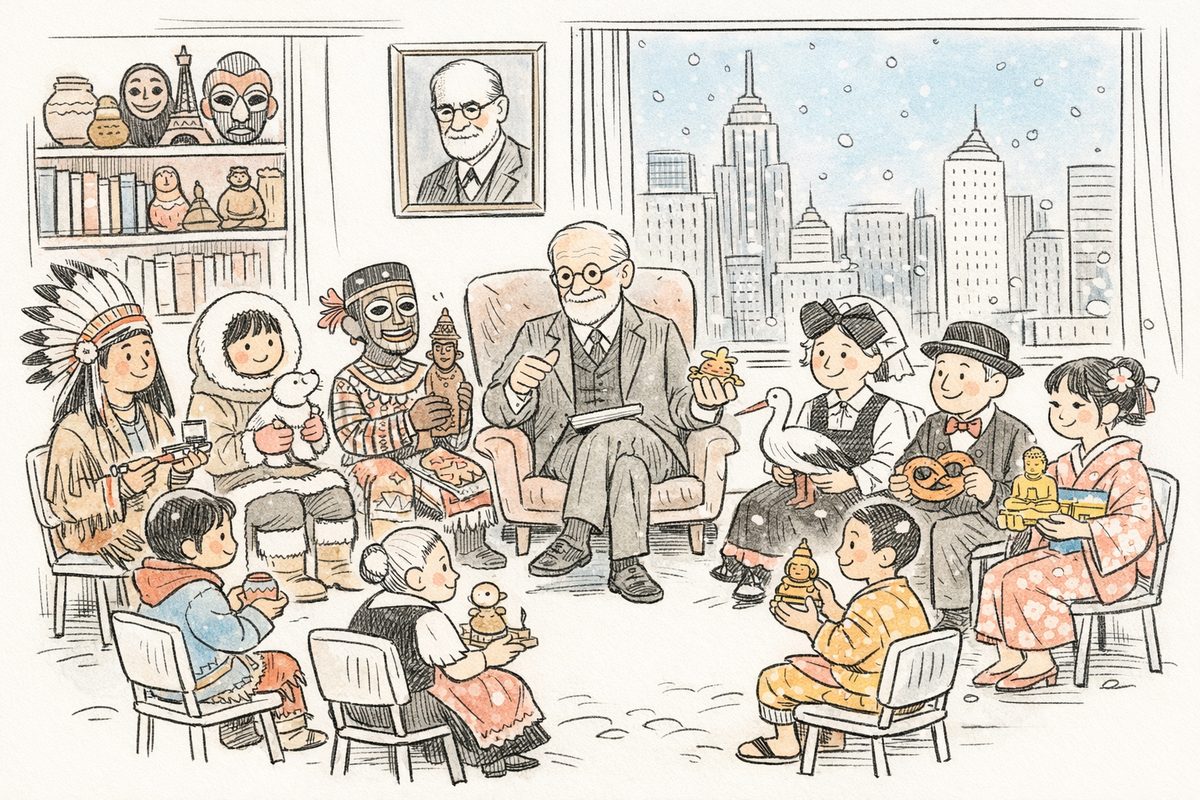
Through a transcultural and psychoanalytic lens, this article explores how collective rituals can function as therapeutic devices in the face of trauma. Drawing on examples from diverse cultural traditions - from Congo Square in New Orleans to Siberian shamanic ceremonies, from the pilgrimages of travelling communities in Camargue to religious festivals in India - it shows that psychological care is not limited to the clinical space. It can emerge in shared cultural settings where the body, speech and the group are set in motion. This perspective echoes the work of Moro, Nathan, Hamayon and Piketty, and questions the role of the therapist as mediator of connection, narrative and framework.
In his documentary When the Levees Broke (2006), Spike Lee depicts the consequences of Hurricane Katrina, but above all the invisible wound left by institutional abandonment. Through testimonies, songs and gatherings, he shows how culture becomes a place of memory, resistance and care. This cinematic gesture illustrates a fundamental truth: care is not limited to the individual. It is cultural, communal, and sometimes sacred.
This idea resonates with transcultural clinical practice, which considers that psychological care cannot be separated from the cultural context in which the subject evolves. Collective rituals, shared narratives and symbolic gestures serve as therapeutic mediations, especially in the face of trauma.
Congo Square in New Orleans is an emblematic site where freed slaves gathered every Sunday from the 18th century to dance, sing and practice African rites. This weekly gathering, within a ritualised framework, not only preserved cultural memory but also transformed suffering into symbolic expression. Today, groups still gather there to honour this living memory, in a logic of repair and resilience. Congo Square can be understood as a genuine community therapeutic device, where the body, music and group allow emotional movement. It functions as a shared psychic stage, comparable to ancient Greek theatre, where emotions can be experienced, expressed and transformed.
The pilgrimage to Les Saintes-Maries-de-la-Mer offers another example. Each year, travelling communities (such as Gitans, Roma, Manouches) gather in Camargue in Southern France to honour Sainte Sara the Black. The procession to the sea, the songs and dances constitute a ritual of family transmission and identity recognition. Often marginalised in public space, this pilgrimage nonetheless provides a powerful symbolic framework where internal conflicts can be replayed and transformed collectively.
In India, the festival of Durga Puja celebrates the goddess Durga, a figure of strength and protection. Processions, dances and community rituals reaffirm social bonds, particularly in regions affected by catastrophe or violence. The ritual becomes a space of transformation, where trauma can be narrated, shared and symbolised through protective figures.
Among Indigenous peoples of Siberia, shamanic rituals are used to repair psychological and social imbalances. The shaman, in trance, enters into contact with spirits to restore harmony after traumatic events. These ceremonies allow the symbolisation of chaos by reintegrating the subject into a cosmic and communal order.
Indigenous peoples of North America practice talking circles and sweat lodges as rituals of purification and healing. These practices allow trauma to be narrated within a containing framework where body, speech and group are mobilised together. The therapist, in this context, is not an external expert but a member of the circle, guardian of the framework and of speech.
In his Poetics, Aristotle defines tragedy as “an imitation of actions arousing pity and fear, effecting a catharsis”. Greek theatre offered a collective space where spectators could experience emotions through tragic heroes within an aesthetic and ritualised frame. This therapeutic function of ancient theatre foreshadows contemporary community care settings, where shared narrative becomes a tool for transformation.
As Marie-Rose Moro emphasises, culture is a resource for therapeutic work. It allows the subject to be thought within their context, history and belonging. It offers symbolic mediations where verbal language fails. It also allows suffering to be recognised in its collective, historical and sometimes spiritual dimensions. In transcultural clinical practice, the therapist becomes a mediator of connection, guardian of the framework, witness of the narrative. The goal is not to “normalise” the patient but to help them think themselves within their culture, body and group.
The work of Thomas Piketty and Michael J. Sandel on equality reminds us that “health, education and culture must not be commodified”. These domains belong to the commons, just like the environment. Their dialogue highlights the corrosive effects of commodification on social solidarity and calls for a democratic renewal in which care and culture are recognised as fundamental rights. Thus, ritual and cultural practices of care, often informal and community‑based, embody a form of resistance to the privatisation of connection and the fragmentation of meaning. They remind us that psychological care cannot be separated from the cultural and social fabric in which it is embedded.
In the face of trauma, collective ritual acts as a stage of catharsis. It allows replaying, transforming, symbolising. It offers a framework where the subject can speak, connect and repair. Whether Congo Square, Les Saintes-Maries-de-la-Mer, Durga Puja or sweat lodges, these practices show that care is also a matter of culture, memory and connection — and cannot be reduced to a commodity or an economic service.
References
Aristotle. (1991). Poetics (J. Hardy, Trans.). Flammarion. Hamayon, R. (1990). La chasse à l’âme: Esquisse d’une théorie du chamanisme sibérien. Gallimard. Lee, S. (Director). (2006). When the Levees Broke: A Requiem in Four Acts [Documentary film]. HBO. Moro, M.-R. (2012). La culture dans la psychiatrie: Une clinique de l’altérité. La Découverte. Nathan, T. (2007). L’influence qui guérit: Thérapie et rituel. Odile Jacob. Piketty, T., & Sandel, M. J. (2024). Ce que l’égalité veut dire: Éducation, justice et bien commun. Seuil.