The Invisible Side of Autism
Over the course of clinical work, certain young people teach us to look differently at things we once took for granted.
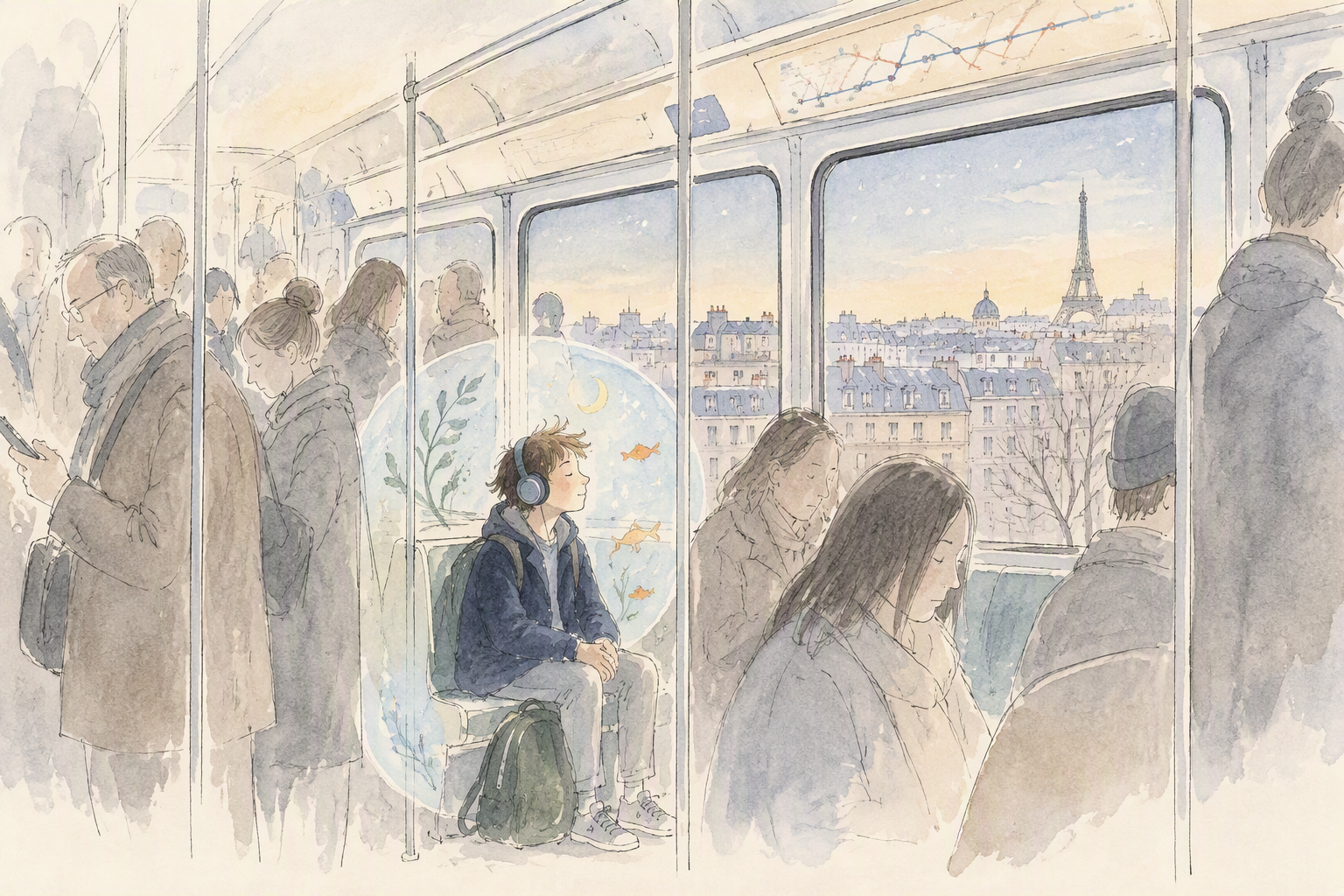
A light shining overhead. A door slamming. The hum of a fluorescent fixture. A conversation taking place in the next room. The sound of a subway train arriving at the station.
For most of us, these elements form the ordinary backdrop of daily life. We barely notice them. They emerge and disappear in the background while our attention remains focused elsewhere. For some young people on the autism spectrum, however, the experience can be very different. The world is not simply more intense. It can also be harder to filter.
Where many of us instinctively sort, prioritize, and tune out sensory information, some autistic individuals seem to receive it all at once, with an intensity that consumes a significant portion of their mental and emotional resources. The visible difficulties that often draw the attention of professionals, teachers, or family members may be only the surface expression of a far more discreet reality: the constant effort required to inhabit an environment that feels overwhelming.
International research has profoundly transformed our understanding of these experiences. Long viewed as a secondary aspect of autism, sensory differences are now recognized as a central component of the autistic experience. They are explicitly included in current diagnostic criteria. A growing body of research demonstrates that sensory processing differences influence quality of life, attention, learning, social participation, anxiety levels, and overall mental health. Several recent studies further suggest that emotional and behavioral difficulties are often closely linked to the degree of fit between a person’s sensory needs and the environment in which they live.
In other words, some challenges that are often attributed solely to the individual may also reflect environments that are insufficiently adapted to the way that person experiences the world.
When meeting the young people supported by our outpatient autism service at Fondation l’Élan Retrouvé, these realities become strikingly concrete. They reveal themselves in details that might otherwise seem insignificant. A teenager arrives visibly tense after a commute. Another describes feeling exhausted after spending several hours in a noisy setting. A third struggles to engage in an activity because a change in lighting or movement around him captures his entire attention.
Their words are often simple.
“There’s too much noise on the subway.”
“When people argue at the residential home, it stays in my head afterward.”
“When someone yells, I can’t think anymore.”
These brief statements tell us something essential. They remind us that what many people experience as background noise or an ordinary event may continue to resonate long afterward for someone else, occupying mental space, overwhelming attention, and making emotional regulation much more difficult.
It is from this perspective that our team at Fondation l’Élan Retrouvé pays particular attention to sensory regulation in the care of autistic children, adolescents, and young adults aged 5 to 21.
Among the resources available is a sensory rest room designed as a space for temporary retreat and restoration. The room includes beanbags, adaptive seating, adjustable lighting, soothing sensory materials, and illuminated aquariums whose slow, predictable movement contributes to an atmosphere of calm and containment. The purpose of this space is not to shield young people from the world or eliminate stimulation altogether. Rather, it offers an opportunity to return to a level of sensory input that is more compatible with their individual needs.
Some young people use the room for a few minutes before an appointment; others seek it out after particularly demanding activities. Recent scientific literature on multisensory environments suggests that such spaces can promote relaxation, support emotional regulation, and enhance feelings of safety when integrated into individualized therapeutic programs.
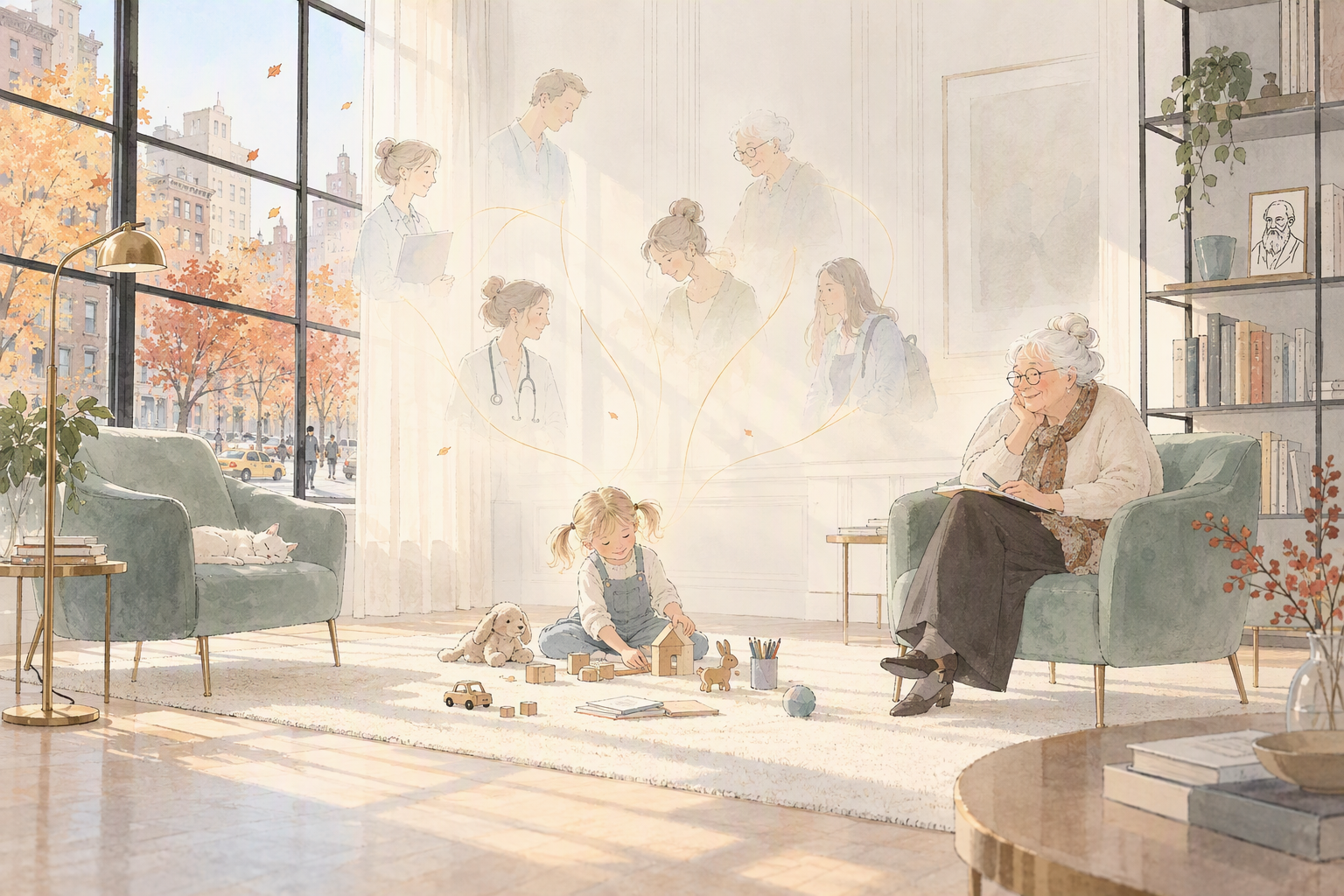
Yet sensory needs extend far beyond clinical settings. They accompany young people wherever they live, learn, travel, and build relationships.
For many autistic individuals, the challenges begin long before they arrive for therapy.
The journey itself may be exhausting.
The noise of subway trains. Loudspeaker announcements. Crowded platforms. Sudden braking. Strong odors. Unpredictable changes.
For some adolescents, the use of noise-canceling headphones is a simple but invaluable accommodation. Not because it disconnects them from the world, but because it helps them remain available to participate in it.
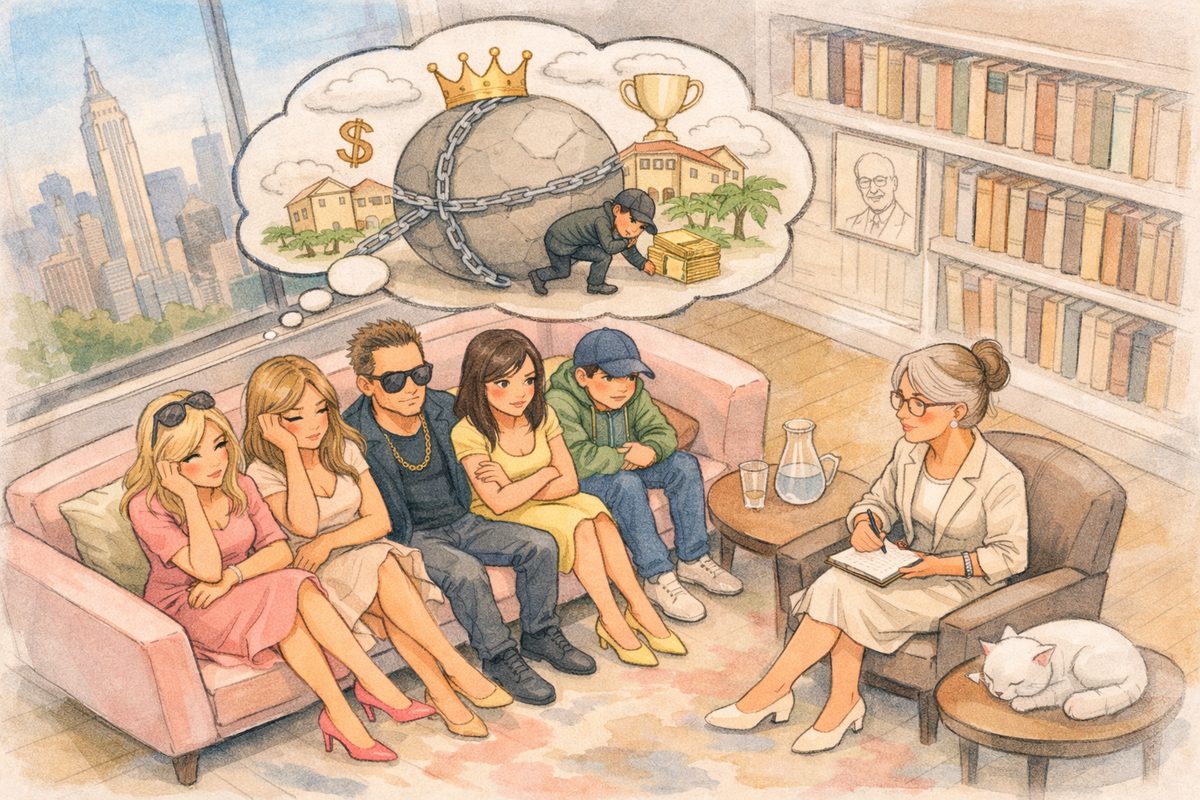
The same questions arise within living environments. In family homes, residential settings, or supported housing, sensory experiences may shape daily well-being as much as interpersonal relationships do. When several siblings share the same space, competing sensory needs can easily emerge. The games, laughter, arguments, television sounds, and everyday movement that bring life to a household may become overwhelming for a young person who is particularly sensitive to noise or unpredictability.
The goal is not to silence family life or ask everyone to walk on eggshells. Rather, it is to explore how a shared environment can remain livable for everyone. Sometimes a designated quiet space, predictable routines, advance preparation for transitions, or permission to step away temporarily can significantly reduce stress and sensory overload.
Similar considerations arise within therapeutic groups. In theater workshops and creative interventions, young people with very different neurodevelopmental profiles often participate together. Some seek movement, spontaneity, and constant interaction. Others require predictability, stable routines, and a more carefully regulated sensory environment.
The clinician’s task is to create a setting flexible enough to accommodate these differences without allowing one way of being to overshadow another. The adjustments are often subtle: a quiet corner that remains available throughout the session, adapted instructions, smaller groups, or careful attention to sensory stimulation levels. Much of this clinical work remains invisible to outside observers, yet it often determines whether participation is possible at all.
I often think of Yanis, a thirteen-year-old adolescent.
His name and certain identifying details have been changed to protect confidentiality.
Yanis is bright, thoughtful, and deeply curious. Yet some days seem to cost him an enormous amount of energy. Over time, a reality that initially remained invisible gradually emerged. His exhaustion was not caused solely by social demands or academic expectations. A significant portion of his energy was devoted to managing the sensory information constantly surrounding him.
Crowded transportation, collective living environments, unexpected changes, and noisy settings all demanded considerable adaptation.
As he learned to recognize the signs of sensory overload, use noise-canceling headphones in specific situations, and allow himself moments of sensory recovery, meaningful changes began to occur. More of his resources became available for learning, relationships, creativity, and the interests that bring him joy.
Yanis had not become a different person.
His environment had become more compatible with who he already was.
Perhaps this is one of the most important lessons emerging from contemporary autism research.
For many years, the central question seemed to be: How can we help autistic people adapt to the world around them?
That question remains important, but perhaps it is no longer sufficient.
A different question deserves our attention.
How can we make the world more inhabitable for autistic people?
How can a student fully engage in learning when a significant portion of their attention is already devoted to managing the noise, lighting, movement, and unpredictability of the classroom?
How can we expect independence in public transportation when every journey requires substantial sensory effort?
How can emotional well-being be maintained in residential settings where noise, conflict, and constant stimulation are part of daily life?
And what if some of the difficulties we continue to attribute to the individual actually reflect environments that have yet to accommodate the diversity of human sensory experience?
Inclusion may not begin solely with access to a school, a workplace, or a clinical service.
Sometimes it begins with softer lighting.
A quiet place to retreat.
The acceptance of noise-canceling headphones without judgment.
A classroom designed differently.
A living environment attentive to sensory needs.
A society willing to recognize that there are many legitimate ways of perceiving and inhabiting the world.
Before we can learn, work, communicate, create, or build meaningful relationships, we must first feel sufficiently safe within our environment.
For many autistic young people, that sense of safety begins with the recognition of what their senses have been trying to tell us all along.
Perhaps that is where an essential, and still too often invisible, part of autism resides.
References
American Psychiatric Association. (2022). Diagnostic and Statistical Manual of Mental Disorders (5th ed., text rev.; DSM-5-TR). American Psychiatric Publishing.
Camino-Alarcón, J., Robles-Bello, M. A., Valencia-Naranjo, N., & Sarhani-Robles, A. (2024). A systematic review of treatment for children with autism spectrum disorder: The sensory processing and sensory integration approach. Children, 11(10), 1222.
Chen, Y., Xi, Z., Saunders, R., et al. (2024). Sensory processing differences and emotional and behavioural difficulties in autism: A systematic review and meta-analysis. Clinical Psychology Review.
He, J. L., Williams, Z. J., Harris, A., et al. (2023). A working taxonomy for describing sensory differences in autism. Molecular Autism, 14(15).
Lai, M. C., Anagnostou, E., Wiznitzer, M., Allison, C., & Baron-Cohen, S. (2020). Evidence-based support for autistic people across the lifespan: Maximizing potential, minimizing barriers, and optimizing person-environment fit. The Lancet Neurology, 19(5), 434-451.
Leonardi, S., Di Cara, M., Giliberto, S., et al. (2025). The use of multisensory environments in children and adults with autism spectrum disorder: A systematic review. Autism, 29(8), 1921-1938.
Narzisi, A., Vivanti, G., Berloffa, S., et al. (2025). Sensory processing in autism: A call for research and action. Frontiers in Psychiatry, 16, 1584893.
Price, J., & Romualdez, M. (2025). Autistic secondary school students’ experiences of sensory sensitivities in educational settings. Autism.
Liu, C. H., Doherty, M., & Lai, M. C. (2026). Autistic SPACE: Clinician advocacy for improving school environments for autistic young people. The Lancet Child & Adolescent Health.