Parents

-
 Marie Nussbaum
 - 25 Feb, 2026
When Anger Speaks: Listening to the Child Through Their Storms
A child’s anger is never just an overflow. It is a language. A call. A sometimes clumsy, sometimes desperate attempt to express something that has not yet found its words. In my consultation, I meet children of two, four, seven, ten years old, and each carries their anger like a garment that is either too big or too tight. It never says the same thing. It never comes from the same place. It never asks for the same response. Winnicott reminded us that a child can only develop if they find an environment capable of holding their emotions without crushing them. Anger, in this sense, is not a problem; it is a sign of life. Dolto said that a child who becomes angry is a child trying to be heard. Lebovici emphasized the importance of understanding anger within the relationship, within the link, within the child’s history. Nothing is ever isolated. Nothing is ever simple. At two years old, anger is often a brief, violent, total storm. The child does not yet know how to wait, to defer, to symbolize. They live in immediacy. They want, they refuse, they demand, they collapse. Their anger is a sensory thunderstorm. It says, “I don’t yet know how to do otherwise.” It says, “Help me contain myself.” It says, “Stay close.” Daniel Stern described this moment as an age when the child discovers their own power, but also their own helplessness. Anger is then a way of feeling alive. At four or five years old, anger changes shape. It becomes more theatrical, more relational. The child tests, provokes, opposes. They search for limits to make sure they exist. They search for the adult to make sure they hold. Didier Houzel wrote that parenthood is a living space, sometimes fragile, sometimes wounded, and that a child’s anger often touches the adult’s own vulnerabilities. At this age, anger says, “See me.” It says, “Don’t leave me alone with what I feel.” It says, “Help me understand what is happening inside me.” At seven or eight years old, anger becomes more complex. The child begins to perceive social rules, school expectations, comparisons. They may feel overwhelmed, humiliated, misunderstood. Their anger may be a mask for shame, fear, sadness. It may be a way of saying they do not feel up to the task. A way of saying they cannot find their place. Lebovici noted that children of this age live in a rich but fragile inner world, and that anger can be an attempt to protect that world. At ten years old, anger sometimes takes on the tone of early adolescence. It becomes more verbal, more argued, more directed. It may be a way of separating, of asserting oneself, of saying “I” in front of the adult. It may also be a way of hiding a deep vulnerability. Winnicott saw these angers as a sign that the child begins to feel secure enough to dare to contest. Anger then says, “I am growing.” It says, “Let me try.” It says, “Don’t abandon me for all that.” At every age, anger is a message. It is never a whim. Never a flaw. Never a sign of poor parenting. It is an enigma. An enigma the child entrusts to us, sometimes without wanting to, sometimes without knowing it. And it is up to us, adults, to unfold it with them. Supporting anger means first recognizing it. Telling the child, “I see this is hard.” Offering them a space where they can calm down without being shamed. Showing them that their emotions do not destroy us. Teaching them, little by little, to put words where there were only cries. Teaching them to breathe, to wait, to ask. Teaching them that they are not alone. Anger is a passage. A passage sometimes rough, sometimes painful, but always alive. It says that the child is searching for their place. It says they are bumping into the world. It says they need us to learn how to navigate their storms. And perhaps our role, in the end, is not to extinguish anger, but to listen to it. To hold it. To translate it. To transform it with the child into something that will one day allow them to express differently what they feel. REFERENCES  Dolto, F. (1985). When the Child Appears. Paris: Gallimard. Houzel, D. (1999). The Stakes of Parenthood. Paris: PUF. Lebovici, S. (1983). The Infant, the Mother and the Psychoanalyst. Paris: Bayard. Stern, D. (1985). The Interpersonal World of the Infant. New York: Basic Books. Winnicott, D. W. (1971). Playing and Reality. London: Tavistock.
- Marie Nussbaum
- 01 May, 2025
Separation and Coparental Reconstruction
In my clinical practice, I encounter many parents in transition, facing the profound adjustments brought on by separation. One recurring theme is the presence of children caught in parental conflict — sometimes latent, sometimes overt — where each adult seeks to express their narrative, their legitimacy, their pain. The child then becomes, knowingly or unknowingly, the vehicle of an unresolved conflict. A Rupture with Multiple Effects The separation of a parental couple entails deep transformations. It cannot be reduced to a legal event or an emotional decision; it brings about a psychic reconfiguration of emotional investments and representations. Each parent must disengage from the conjugal bond while maintaining a viable coparental relationship. This process often reactivates intense affects: anger, sadness, a sense of failure, narcissistic wounds — and also more archaic anxieties, tied to the fear of abandonment or the loss of a loved object. Clinical example: A recently separated mother experiences the reorganisation of custody schedules as exclusion. She says, "The father decides everything on his own," and adds, "As if I no longer exist in my son's story." This feeling reveals a narcissistic wound but also an anxiety of erasure — of being erased from the symbolic narrative of the child. From Couplehood to Coparenting The end of romantic attachment does not signify the end of the parental bond, but demands a displacement of psychic investment and transference. Without sufficient processing, this shift may evolve into persistent rivalry, with coparenting becoming the battleground of an unresolved separation. Clinical example: A father confides in session that he struggles to accept not bathing his daughter at the mother's house. "It's our moment. She's depriving me of it like she wants to cut our bond." The ritual becomes the safeguard of affection, and its absence threatens his existence as a loved figure. The Child at the Heart of Reconstruction Children continue to need both parents after a separation. But to keep developing, they require a coherent symbolic space where identifications can be maintained without splitting. When one parent invalidates or erases the other, the child faces a loyalty conflict. They may experience diffuse anxiety, unspoken guilt, or a protective attitude toward the more vulnerable parent. Psychological effects may manifest in symptoms — sleep disorders, aggression, somatic complaints — that signal an internal split between the child's identifications. Clinical example: A seven-year-old boy begins referring to himself in the third person after his father leaves. He says, "He's sad because Daddy yelled." This linguistic shift reveals a defensive process — a dissociation of emotion indicating difficulty integrating affect into subjective speech. The Role of the Clinician as Containing Third The clinician plays the role of containing third. They offer a space where losses can be processed, where affect can circulate, and where the parental bond can be reconstructed — not aimed at reconciling the adults but at restoring exchanges in which each parent is acknowledged in their role. Clinical Conclusion Psychoanalysis does not offer technical solutions but enables us to interpret relational ghosts, reactivated oedipal scenarios, fears of abandonment, and narcissistic struggles playing out in the present. It opens the way for a living form of coparenting — one that can rebuild outside the field of conflict. For the child not to become a mere witness of parental conflict, but to remain central to care and connection, it is essential to preserve a shared psychic space — where each parent can continue to exist, not in the pain of separation, but in the responsibility of building a future.
- Marie Nussbaum
- 01 Apr, 2025
Fostered Kinship and Parenthood
Becoming a parent for someone who was adopted represents more than a life stage — it constitutes a genuine psychic journey, where the very foundations of the bond, origin, and transmission are replayed. The adoption experience continuously resurfaces throughout adulthood, particularly during transformative life events. Parenthood activates psychological traces linked to abandonment, fantasies about origins, and questions about one's capacity to transmit love and identity to the next generation. Psychoanalytic theory presents filiation across multiple dimensions: biological, symbolic, psychic, and narrative. Adoption uniquely challenges each of these axes simultaneously. Biological and Symbolic Dimensions Biological considerations often trigger anxiety. One expectant mother expressed: "I don't even know where I come from, so how will my baby know where they come from?" This reveals how origin uncertainty creates transmission anxieties. The symbolic framework — legal and social — provides formal legitimacy but may not ensure psychological integration. A patient reflected: "Yes, I was adopted. I had a loving family… but I always felt something was missing." Psychic and Narrative Axes The psychic axis determines genuine appropriation of the parental bond. An adopted mother disclosed: "I'm afraid I'll be like the one who left me. It feels like there's a flaw in me." The narrative axis enables subjects to construct coherent identity through storytelling, rewriting personal history via transmission. Prospective parenthood reactivates these dimensions, sometimes conflictually. One man undergoing assisted reproduction stated: "I need a child to prove that I belong to a lineage too." Clinical Variations Bydlowski's concept of psychic transparency describes this vulnerable period where unconscious material emerges intensely. Parentification — becoming psychically parental — may experience delays or obstacles. Some adopted adults approach parenthood creatively. An adoptive mother explained: "I created my own rituals with my daughter. They don't resemble anything I received, but they're ours." Others experience ambivalence or inhibition. Clinically, the therapist's function involves supporting symbolisation and narrative development, validating parenthood without requiring legitimacy justification. Conclusion Adoptive parenthood demonstrates that parental bonds are not decreed — they are built, negotiated, imagined and narrated. Adopted individuals may become architects of meaningful connection, crafting singular and deeply human kinship.
- Marie Nussbaum
- 01 Sep, 2024
Health of the Child to Be Born
Pregnancy is a period of profound transformation, marked by physical, emotional, and psychological changes. For some women, this period can be accompanied by stress and anxiety, which can have repercussions on their own mental health as well as that of their unborn child. Psychoanalyst Daniel Stern refers to the term "psychic transparency" to describe the state of emotional vulnerability and heightened receptivity to emotions and unconscious thoughts during pregnancy. This transparency can make pregnant women more sensitive to stress and negative emotions, which can affect their mental health and that of their baby. Prenatal Stress and Fetal Development The scientific article "Maternal prenatal stress phenotypes associate with fetal neurodevelopment and birth outcomes" explores the various types of prenatal stress in pregnant women and their impacts on fetal neurodevelopment and birth outcomes. Researchers identified three prenatal stress profiles: the healthy group (HG), the psychologically stressed group (PSYG), and the physically stressed group (PHSG). The results show that prenatal stress can influence birth sex, birth complications, and the development of the fetus's central nervous system. Epigenetic Dimensions Research on microRNA maturation regulation demonstrates that disruptions in this process could have significant implications for understanding various diseases, including cancers and neurodegenerative diseases. MicroRNAs are small non-coding RNA molecules that play a crucial role in regulating gene expression. Another research area involves genomic imprinting, an epigenetic mechanism where the expression of certain genes depends on their parental origin. Anomalies in this mechanism could lead to genetic syndromes, developmental anomalies, and certain cancers — specifically, growth syndromes, certain cancers via abnormal methylation, neurodegenerative diseases, and metabolic disorders such as diabetes and obesity. The Importance of Psychological Support It is important to continue research in this area longitudinally, to better understand and prevent these conditions by also measuring the mental health of parents. In parallel, it also seems essential to provide adequate psychological support to pregnant women to mitigate the negative effects of prenatal stress. This psychological support allows the detection and treatment of mental disorders — such as anxiety and depression — that may occur during pregnancy, and helps develop a healthy and harmonious mother-child relationship.
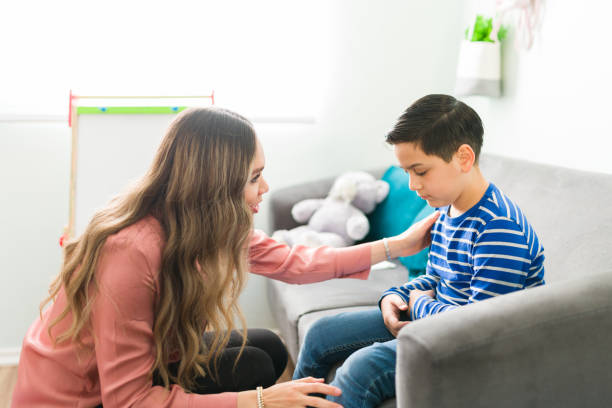
When the Unthinkable Strikes: How to Speak to a Child About Another Child’s Critical Illness
One morning, a friend called me, his voice trembling. He had just learned that the child of close friends — a three‑year‑old with whom his own daughters had played only days earlier — had been placed in an induced coma. A sudden illness, first mistaken for a simple infection, had turned into a life‑threatening emergency. The child could no longer breathe on his own. Doctors were trying to keep him alive. The outcome remained uncertain. My friends were in shock. Shaken for this child, for his parents, and also for their three daughters aged four, nine, and eleven. How could they speak to their children about what was happening? How could they express sadness, fear, and shock — without collapsing, without overwhelming them, but without lying either? How could they accompany this inner tremor that moves through adults and that children, at any age, always perceive, even when nothing has yet been said? Some news makes the ground shift. It reminds us that life can change in a breath. It also reminds us that death is not an abstract idea: it is the only certainty of our existence. We do not know where we will live, whom we will love, how many children we will have, or what we will become. But we know this: we will all die one day. And children encounter this truth sooner or later — sometimes too soon. Parents then search for words that do not betray reality, nor the child, nor their own emotional truth. A child does not need perfect explanations; a child needs a truthful presence. For the youngest, four years old, I suggested to my friend that she might become more tearful, more irritable, more clingy than usual. At that age, a child does not conceptualize death; she feels it. She senses that something trembles in the air, in the bodies of adults, in the house. She does not understand what is happening, but she perceives that something is happening. As Dolto reminds us, the child “knows everything, but does not understand everything.” Naming emotions rather than concepts can help: “You’re sad? You’re worried? You feel that we are upset? That’s normal. We are sad too.” At this age, death is not irreversible. The child may believe one returns from death as from a trip. A simple formulation may be enough: “He is very sick. The doctors are trying to help him. We don’t yet know what will happen.” And it can be helpful to distinguish the hospital from death: the hospital is a place of care, not a place where people die. It is at the cemetery that we accompany the dead. This distinction protects the child from unnecessary fears. For the nine‑year‑old, questions become more precise. Between eight and ten, the child enters what Piaget called the stage of concrete operations: she understands irreversibility, causality, temporality. She knows death exists, that it is final, that it can affect children. She may ask: “Is he going to die?” “Do children die?” “Can it happen to us?” At this age, the child seeks truth, but a truth that does not crush. As Maria Nagy showed, death becomes a biological reality, but the child still needs symbolic protection. A nuanced response might be: “Yes, sometimes children die. It is rare, but it happens. The doctors are doing everything they can. We don’t yet know what will happen. We are sad and worried, but we are together.” The child may also wonder about contagion or responsibility: “Did we give him something?” “Is it our fault?” A clarification can soothe: “It is no one’s fault. You cannot catch what he has by playing. You did nothing wrong.” Children of this age are often helped by rituals. Rituals soothe, contain, symbolize. They allow one to do something when nothing can be done. Lighting a candle. Drawing a picture. Saying a prayer. Thinking of the sick child together. Sending a symbolic message. As Indian psychoanalyst Sudhir Kakar reminds us, rituals are “cultural containers” that transform raw anxiety into thought. For the eldest, eleven, understanding is closer to that of an adolescent. She can grasp the gravity, the injustice, the absurdity. She may feel anger toward the world, the doctors, God, or chance. She may also feel guilty for being healthy, for being alive, for having laughed while the other child suffered. At this age, a truthful presence can support her: “We are very sad. We are afraid. We hope. We are thinking of him.” And leaving room for her own words, her own silences. As Yalom notes, the confrontation with death — even indirectly — opens deep existential questions. The child must feel she can ask them, without having to carry those of the adults. And then there are children with specific needs: cognitive difficulties, developmental disorders, sensory particularities, more fragmented psychic organization, different internal temporality. For them, the announcement cannot be the same. Understanding serious illness or death depends not only on age, but also on symbolic capacities, emotional maturity, relationship to reality, and the way the child thinks — or struggles to think. The work of Peter Hobson, Vikram Patel, and the team at the Montreal Children’s Hospital shows that these children may integrate information more slowly, react later — sometimes weeks or months later — express worry through behavior rather than words, ask repetitive questions to tame the idea, or show diffuse anxiety without apparent link. With them, simple, concrete words without metaphors may be more accessible. Repeating, observing, welcoming can be helpful. The question may arise late, in the middle of a game, a drawing, a silence. And when the child finally finds the opening to ask: “Where is the little boy?” being available at that moment can make all the difference. The absence of immediate reaction does not mean absence of thought. In some children, thought builds slowly, in fragments. The question may arise long after the event. Children do not need to know everything. They need to know you are there. That you hold. That you are sad, but present. That you hope, even in uncertainty. That you can think together about this child without being overwhelmed. And if the child asks: “Do children die?” A gentle and truthful response might be: “Yes, sometimes. But it is rare. And when a child is very sick, doctors do everything they can. We don’t yet know what will happen. We are sad, but we are together.” Accompanying a child in such moments is teaching this: Life is fragile. Death exists. But we do not face what frightens us alone. References  Bowlby, J. (1980). Attachment and Loss: Vol. 3. Loss. Basic Books. Dolto, F. (1985). Lorsque l’enfant paraît. Gallimard. Hobson, P. (2002). The Cradle of Thought. Macmillan. Kakar, S. (1991). The Inner World: A Psychoanalytic Study of Childhood and Society in India. Oxford University Press. Nagy, M. (1948). The child’s theories concerning death. Journal of Genetic Psychology, 73(1), 3–27. Patel, V. (2018). The Lancet Commission on Global Mental Health and Sustainable Development. The Lancet. Piaget, J. (1976). La formation du symbole chez l’enfant. Delachaux & Niestlé. Worden, J. W. (1996). Children and grief: When a parent dies. Guilford Press. Yalom, I. (1980). Existential Psychotherapy. Basic Books. Winnicott, D. W. (1971). Playing and Reality. Tavistock Publications.