The Fart as a Language of the Body: Between Psychoanalysis, Culture, and Everyday Clinical Practice
-
 Marie Nussbaum
 - 10 Feb, 2026
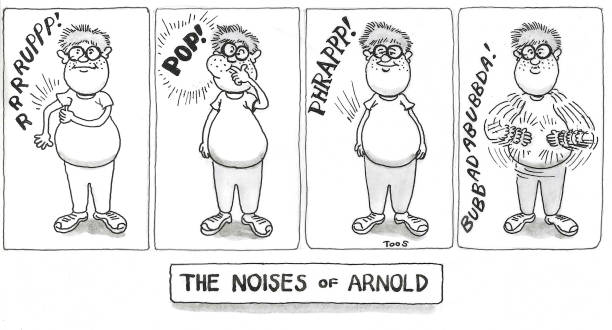
Sometimes it’s helpful to shift our gaze toward the most ordinary gestures to better understand the invisible dynamics that shape us. Observing behavioral differences between ourselves and others—and the internal tension this can provoke—can become an opportunity for learning and introspection. What we perceive as discomfort or provocation, such as a simple fart, may in fact reflect our personal history, our inner state, and that of others. Exploring this interaction, even in its triviality, helps us better situate ourselves in relation to others and opens the door to a form of everyday clinical practice, where the body speaks as much as words do.
Claude Lévi-Strauss, in his work on rites and symbolic structures, did not address farting directly, but his analyses allow us to consider this act as meaningful within cultural systems. In The Way of the Masks and Mythologiques, he shows how fundamental oppositions—pure/impure, nature/culture, visible/invisible—are expressed through codified bodily practices. The fart, as an invisible yet perceptible emission, could be read as a reversal of polarity between inside and outside, between the hidden and the revealed, between the private and the social. Lévi-Strauss emphasized that rites and myths reflect universal mental structures, and that bodily practices, even the most trivial, participate in this organization of meaning.
In some cultures, farting is integrated into social life without particular shame. In Papua New Guinea, it may be part of ritual games or informal communication. In rural China, public toilets are sometimes doorless, and it’s common to see children defecating in public, wearing split pants with an opening at the crotch. This practice, linked to natural infant hygiene, shows that bodily emissions are not necessarily taboo in these contexts. Bodily sounds are not systematically repressed, unlike in Japan, where toilets are often equipped with sound-masking devices that play music or water sounds to conceal bodily noises. This technology reflects a deep-seated social discomfort, especially among women, and a desire to preserve modesty and bodily control in public spaces by erasing any audible trace of intimacy.
From the perspective of clinical psychology and psychoanalysis, farting can be read as an expression of internal conflict, psychic defenses, and modes of expressing discomfort. Freud identified the anal phase as central to the development of the relationship to the body, authority, and control. Farting, as an uncontrolled expulsion, can be a failed act, a discharge of instinctual energy, or a passive provocation. It may express an unconscious conflict between the desire to transgress and the social prohibition.
Wilhelm Reich, in his character analysis, saw bodily relaxation as a release of muscular defenses, allowing repressed affects to surface. Farting can thus function as a defense against anxiety, a way to regulate internal tension without using language.
Jacques Lacan, although he did not address farting directly, considered the body as a surface of jouissance and language. The fart can then be seen as an involuntary signifier, a rupture of the symbolic order, a bodily event that disrupts discourse. It can also be interpreted as disinhibition, reflecting a loosening of internalized norms, or regression to earlier developmental stages. In romantic relationships, it may signal a break in the seduction pact, a trivialization of the body, or even neglect of the emotional bond.
The odor it emits evokes a primary, archaic olfactory trace that allows the subject to feel they exist—for themselves and for others. It conjures fecal matter, rejection, animality, but also proximity and intimacy. It can awaken family memories, childhood atmospheres, domestic practices. Some patients in therapy describe families where farting was common, tolerated, even joked about. Others recall environments where any bodily sound was repressed and associated with shame. The fart then becomes a symptom: it speaks of the subject’s history, their relationship to the body, to law, to desire.
Even cinema has taken up this sound. In The Nutty Professor (1996), Eddie Murphy plays an entire family farting at the dinner table in a burlesque scene that became iconic. Beneath the humor, one can read a collective disinhibition, a transgression of social norms, and a portrayal of the body as a site of pleasure and chaos.
To propose a new perspective on farting is to take a step sideways. It’s to consider that it can be an object of analysis within an everyday clinical framework, where the most banal gestures become carriers of meaning. This reflection invites us to listen to the body in its most trivial yet revealing expressions. And what if, in the end, it’s not the subject who speaks… but the fart that takes the floor? A breath from deep within, saying what the mouth cannot, asserting itself where language hesitates. Because sometimes, in the silence of social conventions, it’s the most unexpected sound that lets the unconscious be heard.
References Freud, S. (1901). The Psychopathology of Everyday Life. Paris: PUF. Freud, S. (1905). Three Essays on the Theory of Sexuality. Paris: Gallimard. Reich, W. (1933). Character Analysis. Paris: Payot. Lacan, J. (1966). Écrits. Paris: Seuil. Lévi-Strauss, C. (1979). The Way of the Masks. Paris: Plon. Lévi-Strauss, C. (1964–1971). Mythologiques (4 volumes). Paris: Plon. Shadyac, T. (Director). (1996). The Nutty Professor [Film]. Universal Pictures.