Beyond the Myth of the Narcissistic Monster: Understanding Pathological Narcissism
There are words that move through an era like meteors. They flare brightly, burn everything in their path, and leave behind a trail of overly simple certainties. “Narcissistic pervert” has become one of these meteors. It appears in conversations, in breakups, in therapy rooms. It arrives like a ready‑made diagnosis, a flag planted on the ruins of a story. It reassures because it explains everything. It soothes because it names a culprit. But it simplifies, it flattens, it freezes. And above all, it prevents thinking.
Clinical work knows no monsters. It knows wounds. It knows defenses. It knows psychic structures, traumas, invisible loyalties. It knows that narcissism is not an essence but a continuum, a shifting landscape shaped by history, loss, humiliation. It knows that behind grandiosity often lies an ancient shame, a feared collapse, an abyss of loneliness.
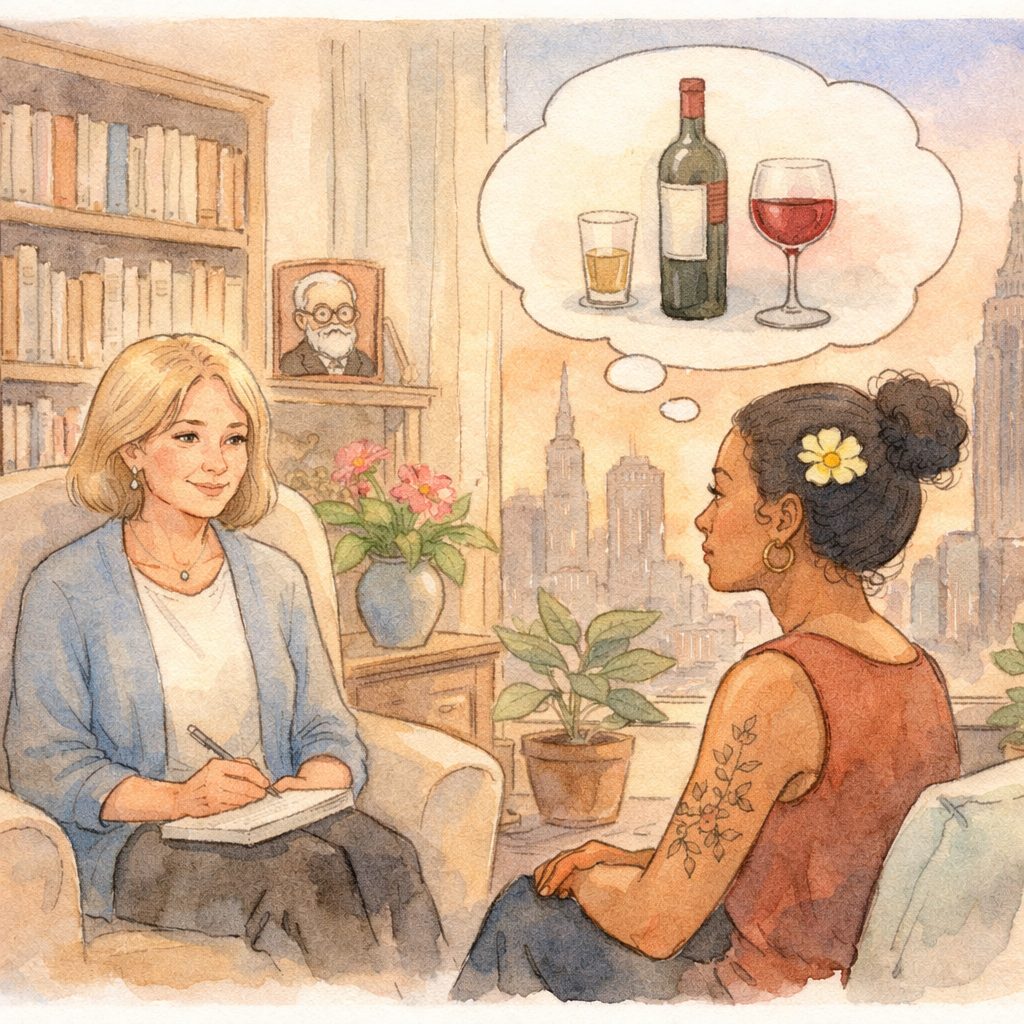
One day, a patient walked into my office with her shoulders raised like ramparts. She sat down without removing her coat, as if she wasn’t sure she would stay. “I lived with a narcissistic pervert,” she said in a flat voice. Then she pulled from her bag a thick folder filled with printed messages, screenshots, evidence. She wanted to show me the violence, the manipulation, the humiliation. But over the sessions, it wasn’t him who emerged, it was her. Her childhood in a house where no one spoke, her father disappearing for days, her mother who never cried, her need to be chosen, recognized, seen. What she had lived was not narcissistic perversion. It was the collision of two solitudes, two wounds, two vulnerabilities clinging to each other until exhaustion.
The narcissistic personality disorder described in the DSM‑5 has nothing to do with the media caricature. The pathological narcissist does not seek to destroy the other; he seeks not to collapse. He walks through life like a tightrope walker suspended between admiration and shame. He manipulates at times, not out of pleasure but out of panic. He dominates at times, not out of cruelty but out of fear of disappearing. He cannot tolerate vulnerability, neither his own nor that of others. He lives in a permanent oscillation between omnipotence and collapse.
“Narcissistic perversion,” in the psychoanalytic sense, exists but is rare. Very rare. Racamier spoke of a “cold enjoyment in destroying the other.” Kernberg described a “perverse organization of narcissism.” These structures exist, but they do not populate ordinary apartments. They are not the clumsy ex‑partner, the hurtful colleague, the rigid parent. They belong to specific psychic organizations, often close to moral perversion or psychopathy. Nothing like what one reads in magazines.
Cinema has sometimes understood this better than popular discourse. Norma Desmond in Sunset Boulevard, a fallen queen whose grandiosity masks a bottomless solitude. Charles Foster Kane in Citizen Kane, whose hunger for power is a desperate attempt to fill an emotional void. Gatsby, whose brilliance hides an original wound. Blanche DuBois, fragile and flamboyant, clinging to illusion to avoid collapse. None of them are “narcissistic perverts.” All are wounded, defended, tragic.
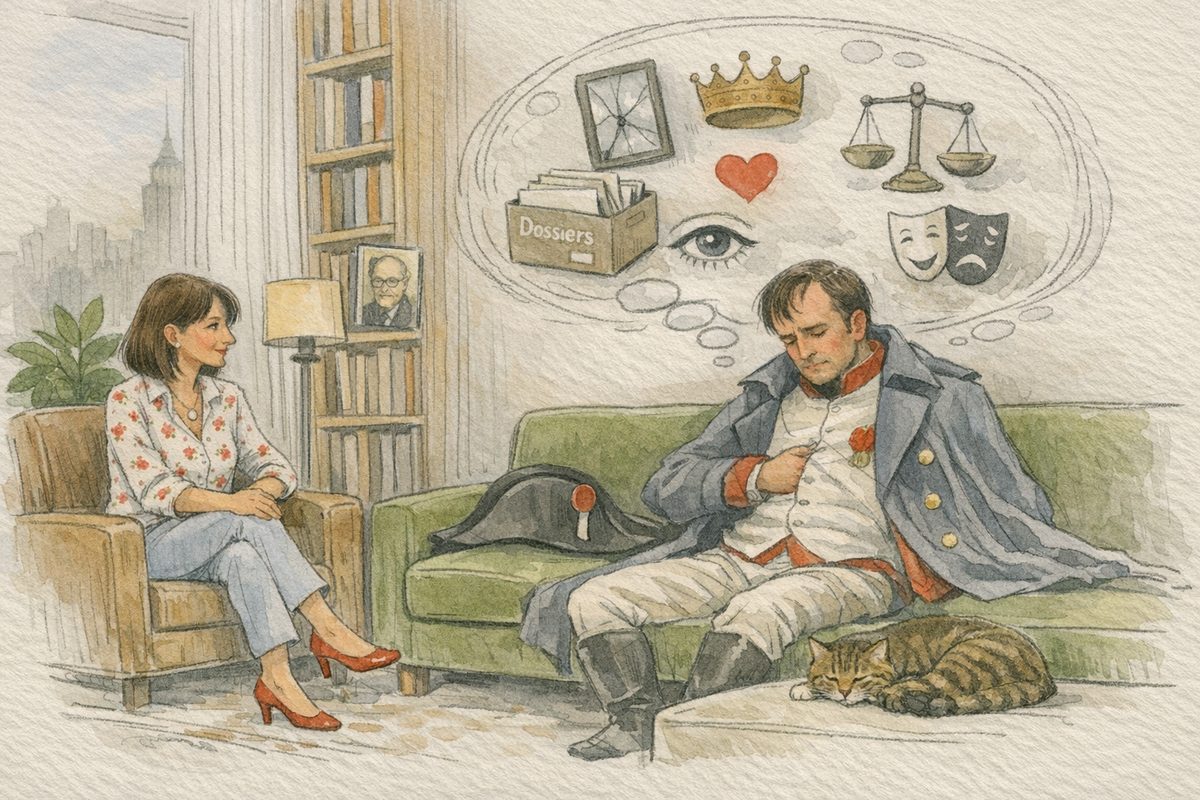
History, too, is filled with figures shaped by narcissism: Napoleon, whose grandiosity hid extreme sensitivity; Howard Hughes, withdrawn into paranoia; Oscar Wilde, dazzling and fragile; Maria Callas, torn between the world’s admiration and intimate loneliness. None were monsters. All were human beings wrestling with their own abyss.
In clinical work, accompanying a narcissistic patient requires great stability. One must contain shame, welcome vulnerability, withstand attacks without withdrawing, offer a space where the façade can crack without collapsing. One must work on dependence on admiration, fear of abandonment, early wounds. One must help the patient discover that they can exist outside performance or omnipotence. One must help them meet the other without feeling threatened, tolerate nuance, endure frustration.
For the partner, the work is to understand what they lived, restore self‑esteem, identify emotional entanglements, rebuild boundaries, release guilt. It is not about naming a villain and a victim but understanding a dynamic. As Winnicott said, “there is no baby without a mother”; there is no relationship without two histories crossing.
Narcissism is not a monster lurking in the shadows. It is a suffering that defends itself. A shame that protects itself. A vulnerability that hides. An ancient fear that hardens. And sometimes, when words find their way, when shame can be laid down, when vulnerability can be welcomed, something softens. Not a miracle, but a shift. A breath. A possibility.
And that is often where the work begins.
References
American Psychiatric Association. (2013). Diagnostic and Statistical Manual of Mental Disorders (5th ed.). Kernberg, O. (1975). Borderline Conditions and Pathological Narcissism. Racamier, P.-C. (1992). Le génie des origines. Winnicott, D. W. (1965). The Maturational Processes and the Facilitating Environment. Freud, S. (1914). On Narcissism. Miller, A. (1981). The Drama of the Gifted Child.